Drupal CMS
Golden standard for privacy and data protection
DrupalDevDays 2025, Leuven
17. April 2025
About myself

Member on drupal.org for almost 18 years
Maintainer of ~100 modules
Find me online:
go.lakedrops.com/jurgenhaas
Track Lead Privacy & Compliance


ECA module maintainer
Gin admin theme co-maintainer

Co-founder and Managing Director
Agenda

- Does it matter? Why?
- Compliance for a global product
- Drupal CMS 1.0 and 1.1
- What’s next
- Conclusion
- Q&A

“A user’s privacy protection should never be contingent on the presence, or the absence, of a privacy regulation which has formalized those principles into law.”
Heather Burns, Author of Understanding Privacy
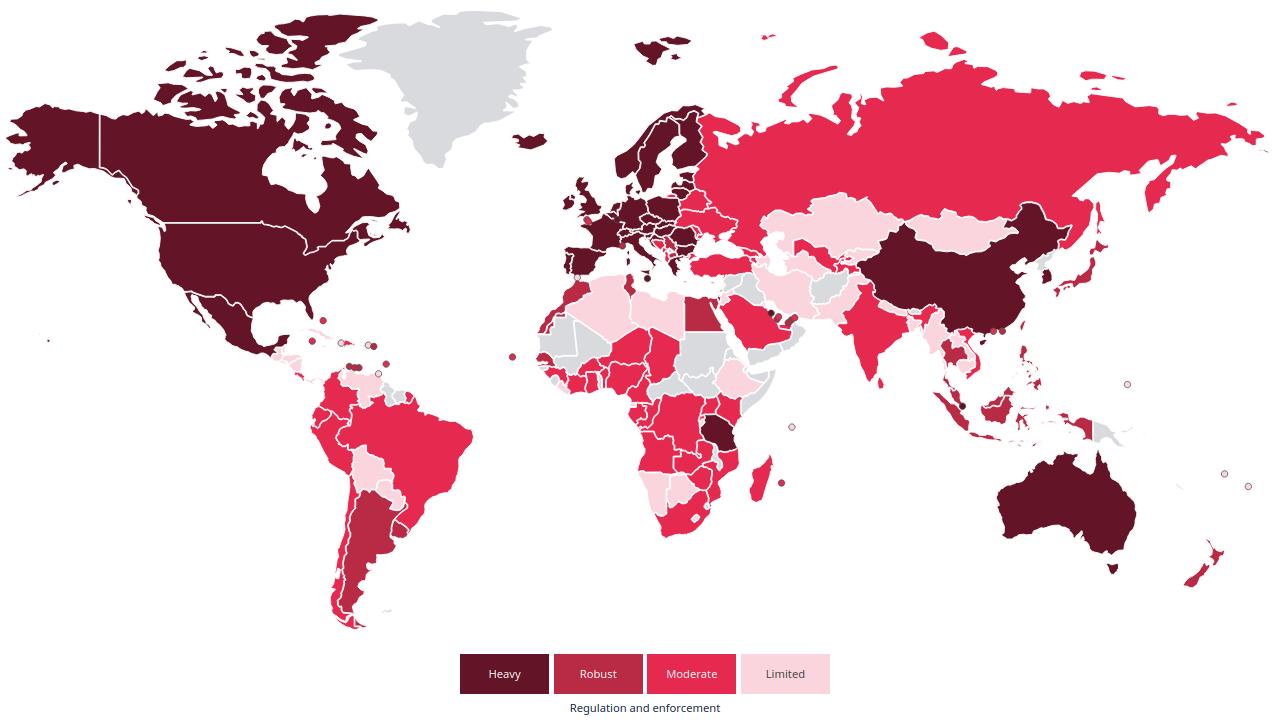
Global product compliance
Privacy regulation exists
in Europe (GDPR),
and in California (CPPA),
right?
Should we build a GDPR version?

Perceived as over-reaching
Hated for its cookie banners everywhere
Not solving a single problem
Getting people to think how they can get around all that “useless privacy stuff”
Or rather a CPPA version?
similar to GDPR
just more beautiful?

Or one for every region?
This is just impossible?
So, let’s get back to what
Heather Burns suggests…
Drupal CMS 1.0 and 1.1
Objective: Provide default setup for the main target audience, marketers, that allows them to become compliant with regulations.
Building blocks
- Consent management
- Data protection
- Ongoing audits
It’s a journey, not a destination.
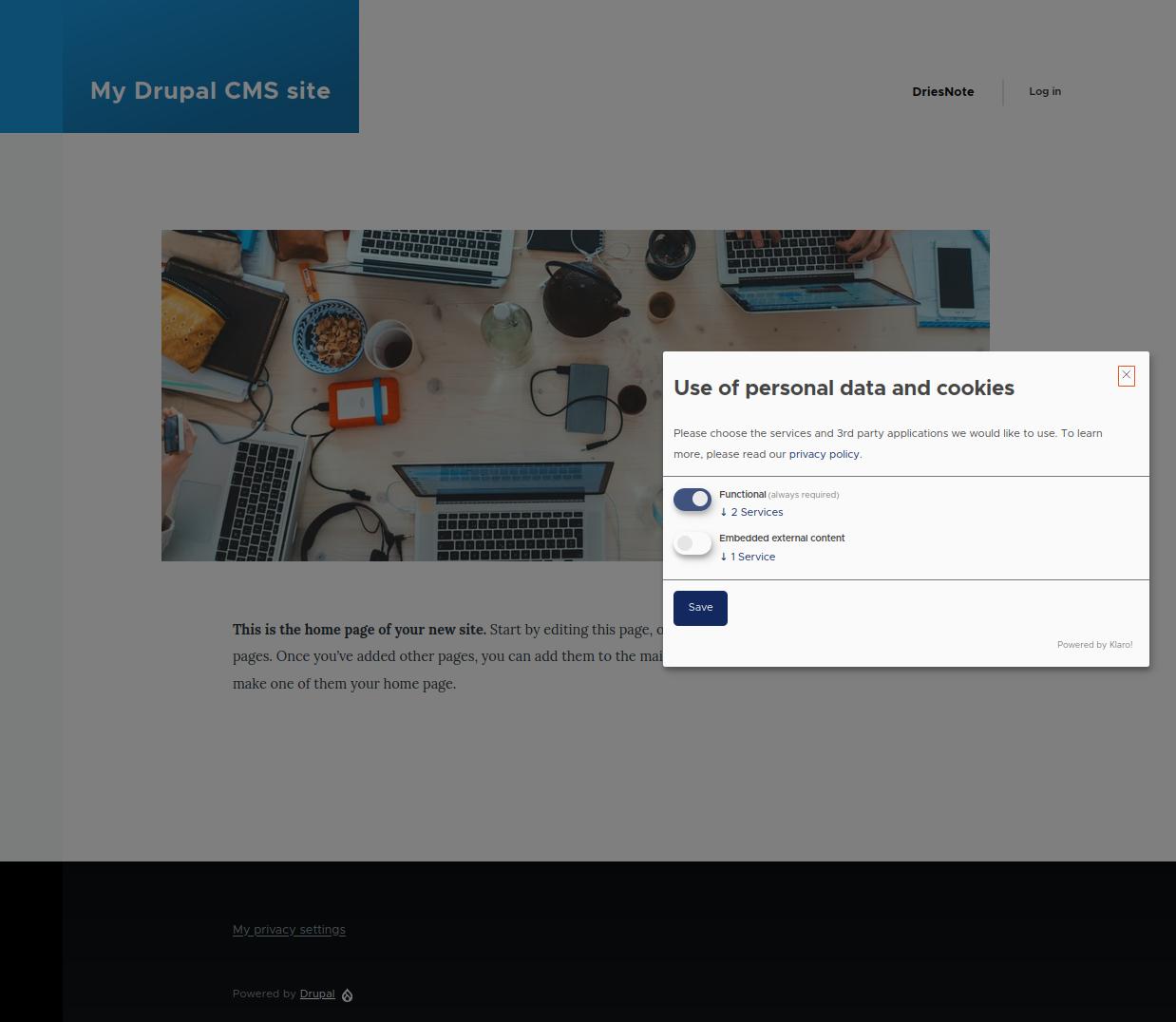
Consent management
- This is not about cookies, forget about cookie banners.
- How many sites do really require consent management?
- 1%? Maybe 5%? At most!
- How many of them implemented consent management correctly?
- Almost none!
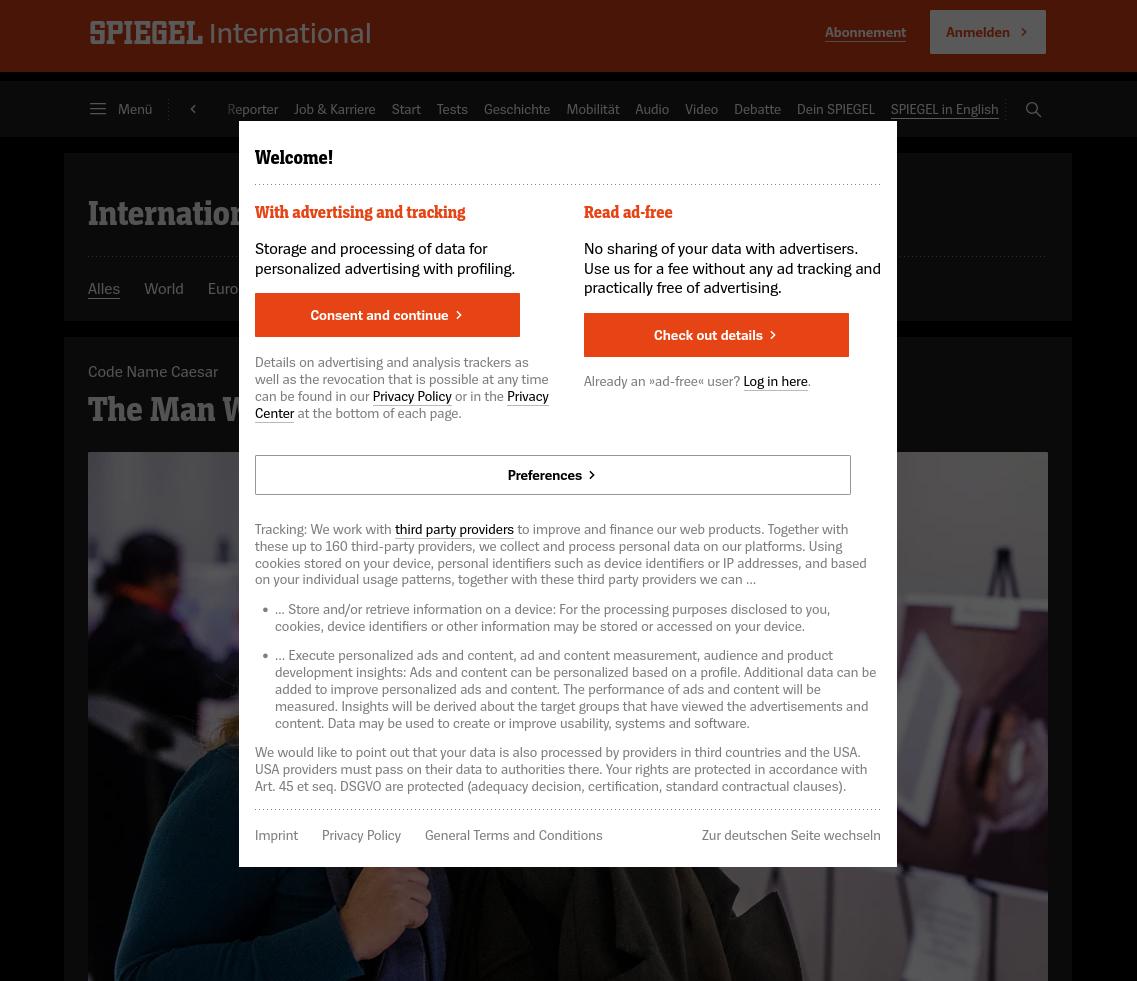
This started an interesting process
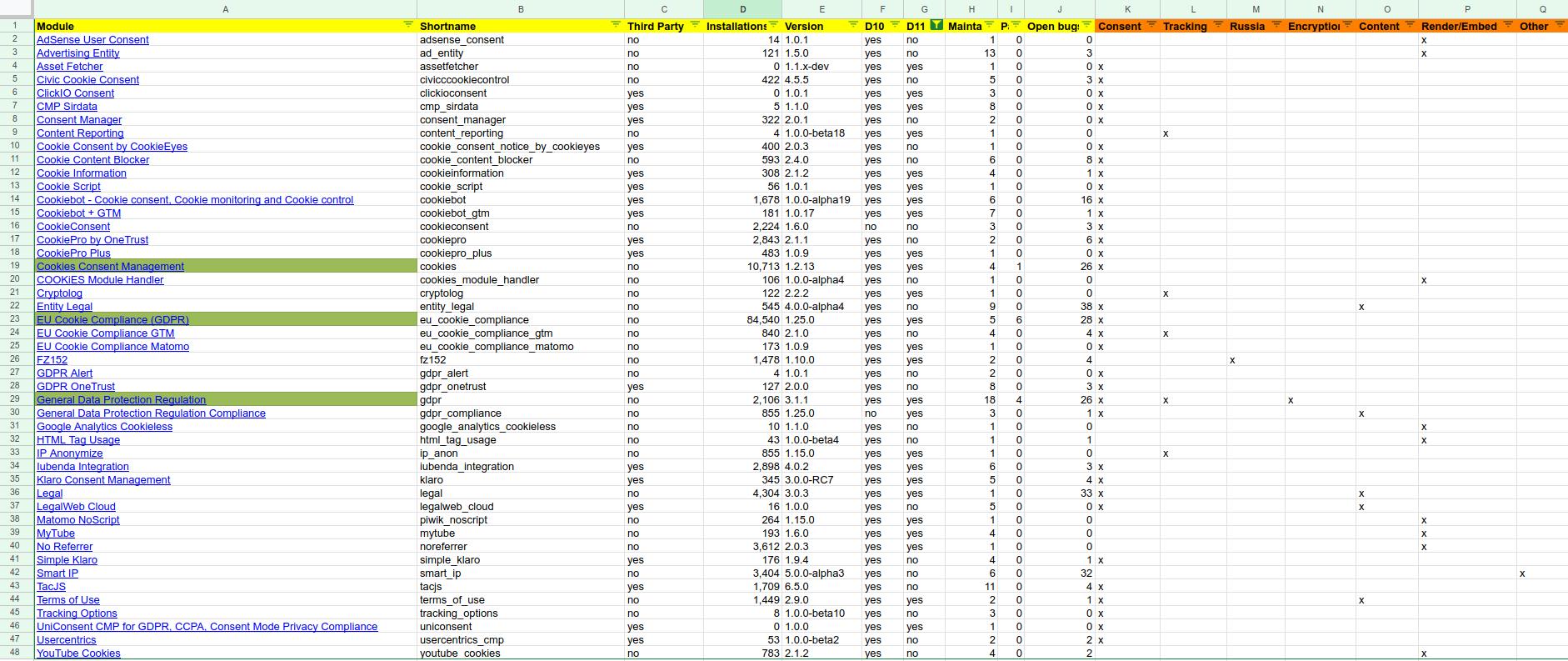
Short list of modules - dusted quickly
| Moule | Short name | Issue |
|---|---|---|
| Cookies Consent Management | cookies | the external library is not open-source |
| EU Cookie Compliance | eu_cookie_compliance | needs a complete rewrite according to its maintainers |
| General Data Protection Regulation | gdpr | great components for data protection but no consent management |

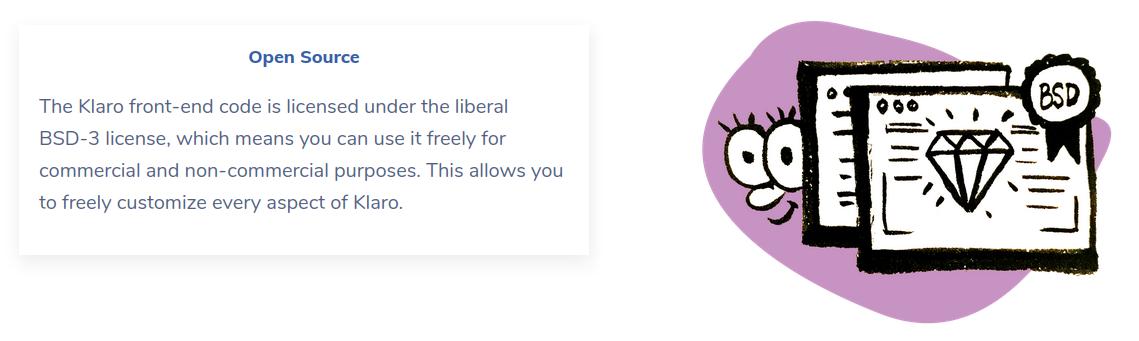
Something exceptional happened

We spoke with the maintainers of eu_cookie_compliance, cookies, and klaro.
They’re interested in joining forces with Klaro and helping to maintain the future de-facto standard for Drupal globally.
They even suggested providing migration paths for existing users of eventually deprecated modules.
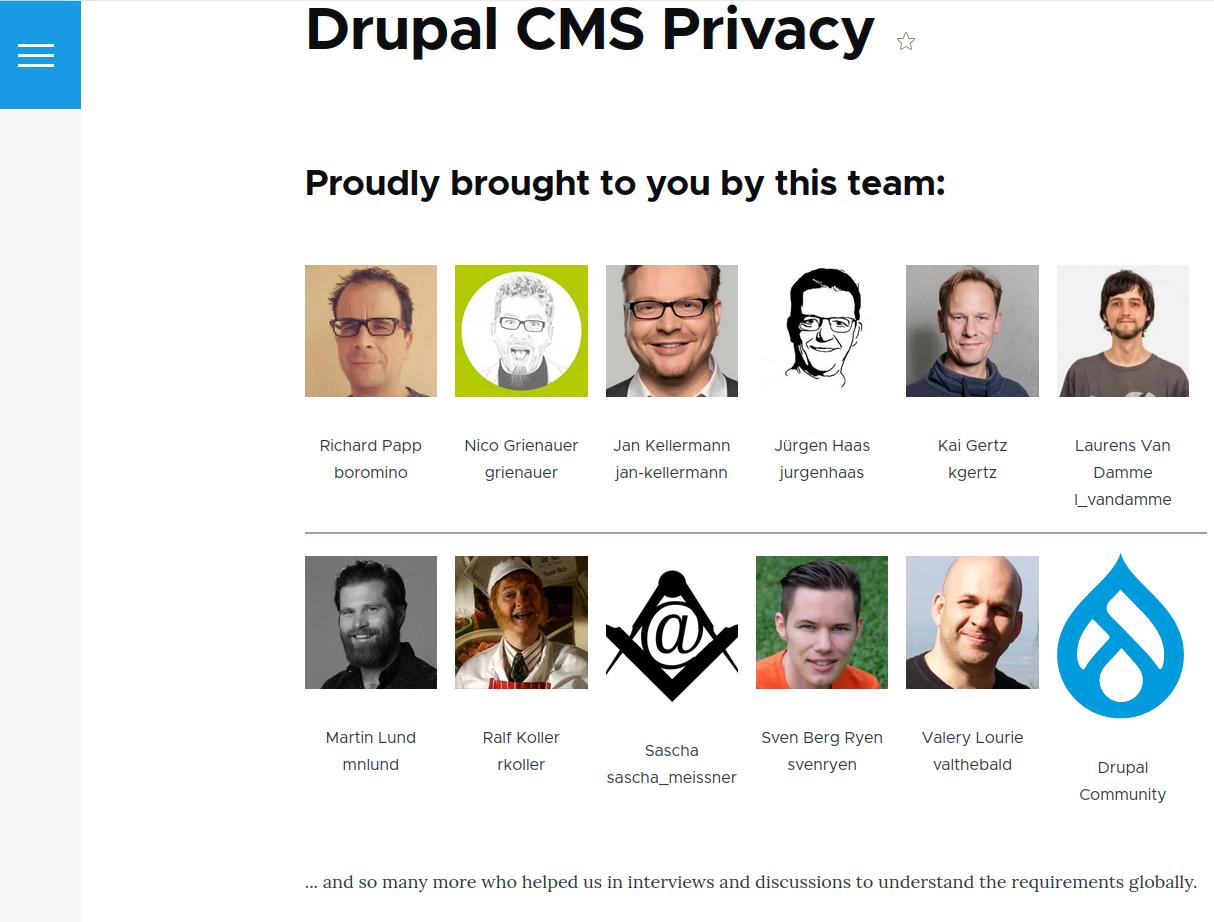
Shout out to Jan Kellermann @Werk21 for his outstanding Klaro maintainership.
Default config in Drupal CMS

It just works
It’s invisible, non-intrusive
Auto-config as the site grows
Widgets take action only when really required
Privacy policy prepared and linked in the footer
No third-party components pulled from remote sites
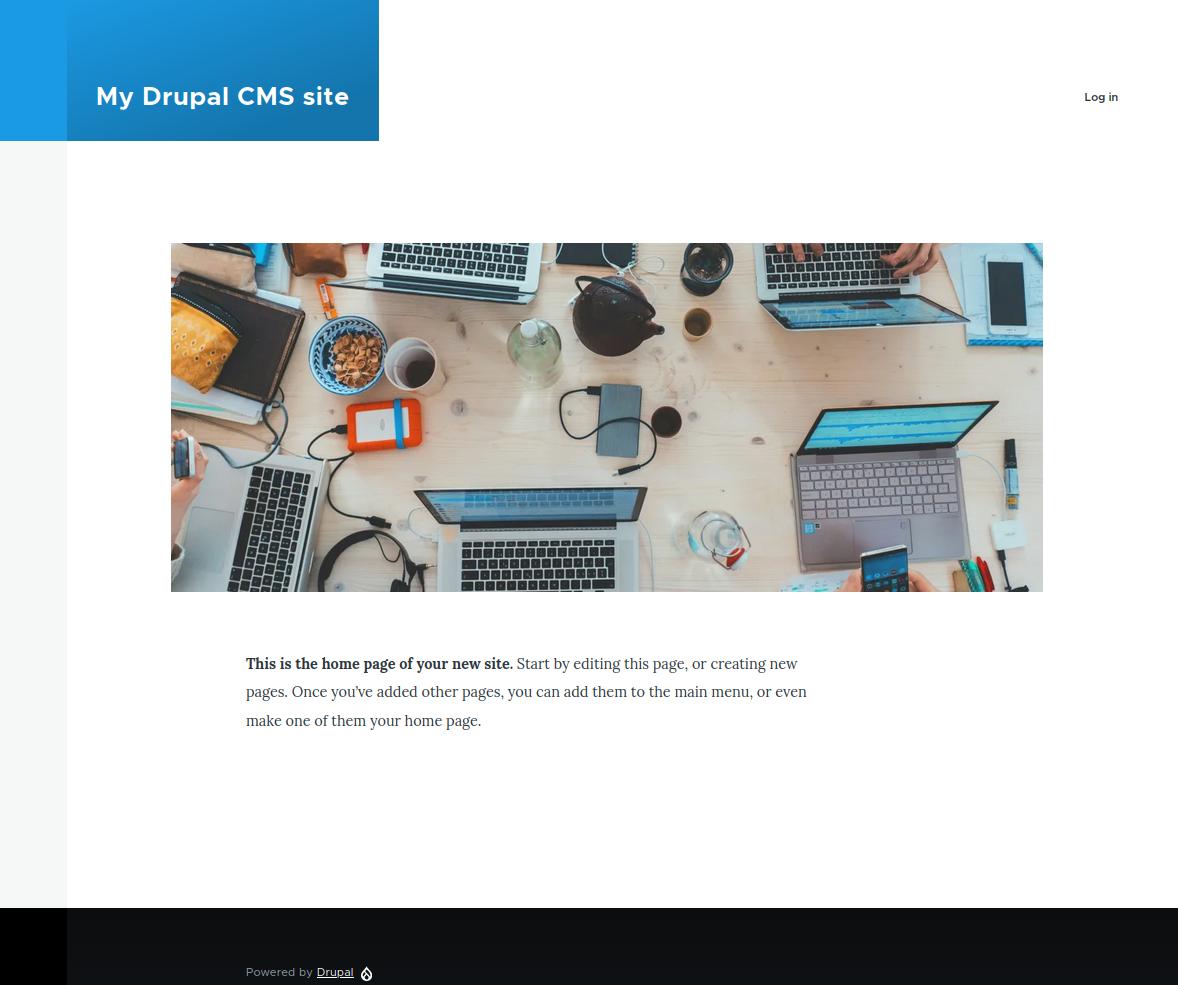
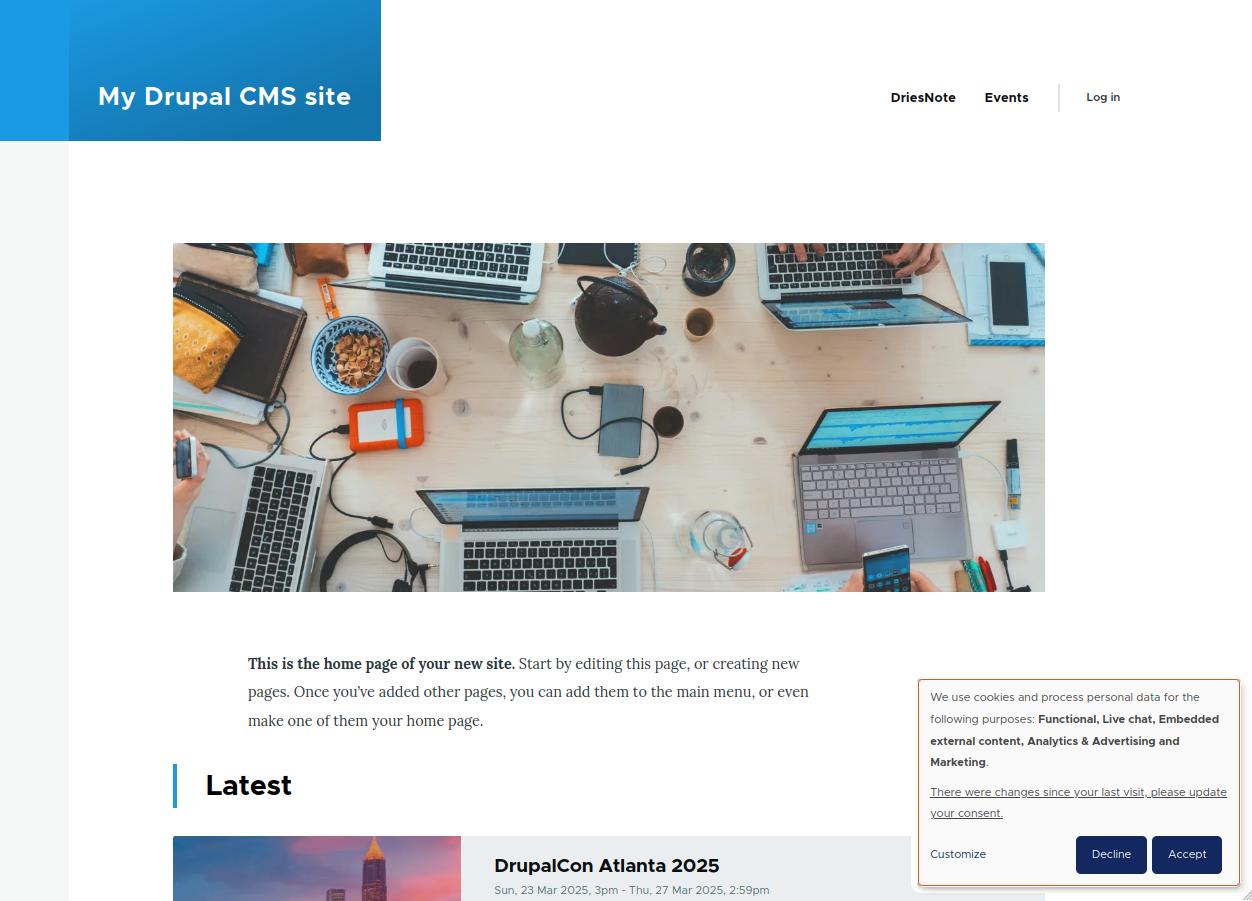
A fresh installation of Drupal CMS
No disturbing widget for the user
Yet, this site is prepared for compliance and has everything needed on board
Let’s add some content with an embedded remote video
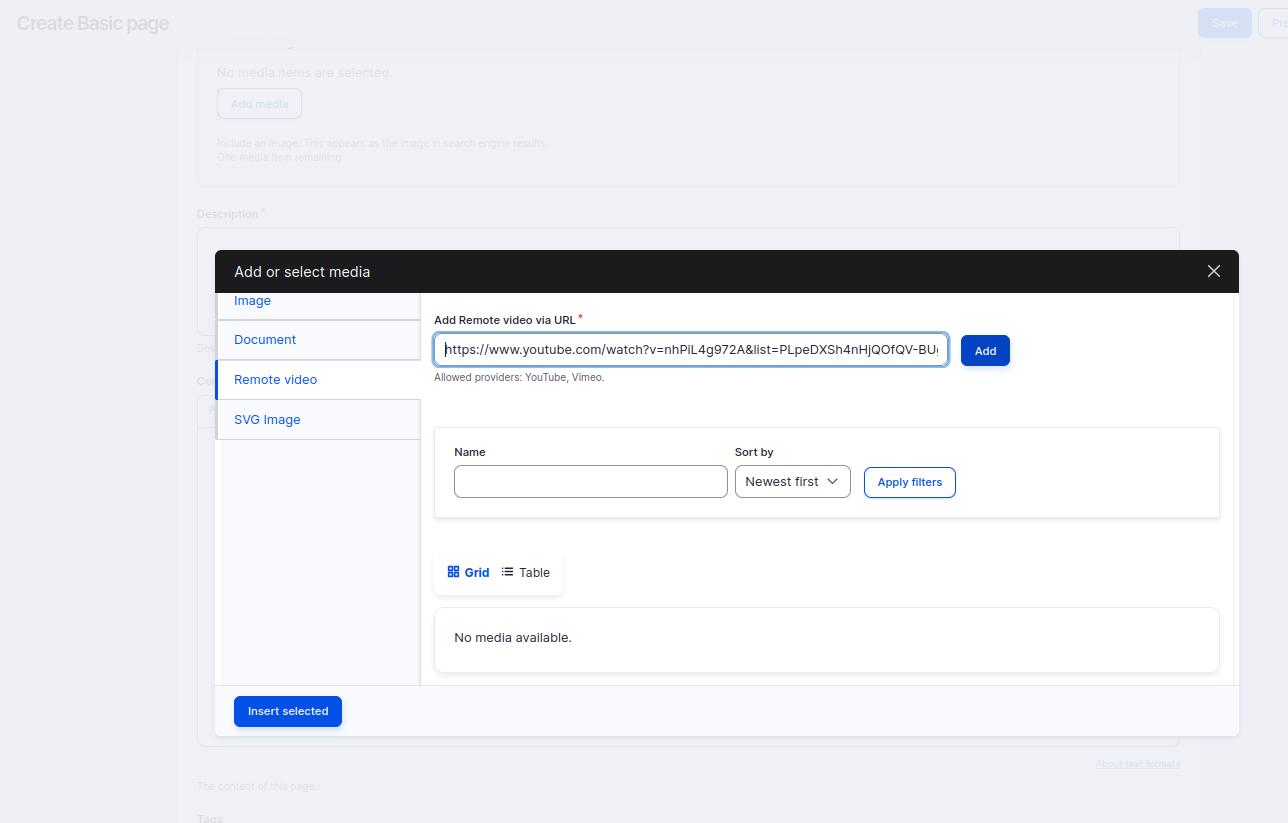
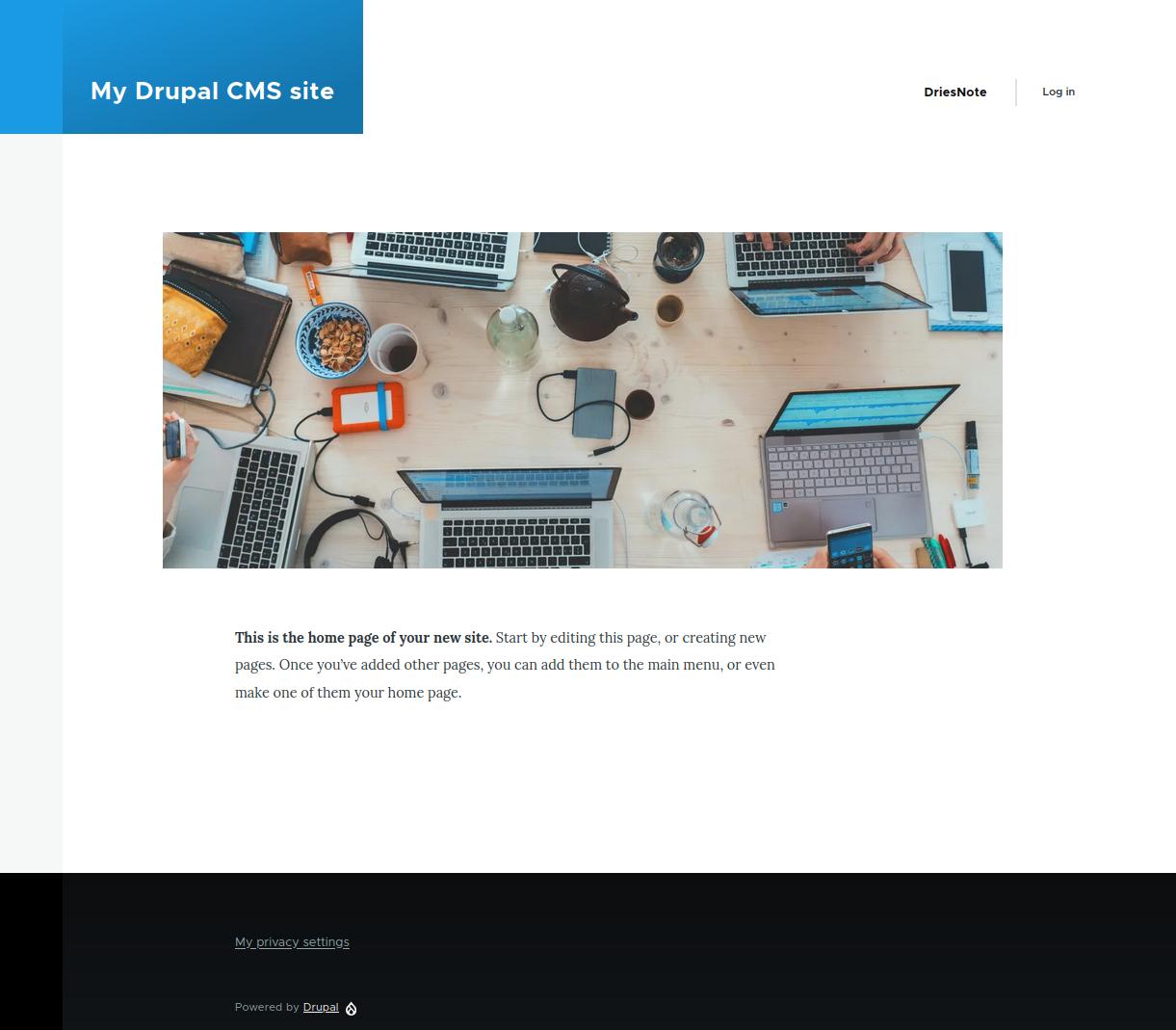
There is still no disturbing widget
Because we don’t have to
Instead there is a link to privacy settings in the footer
The widget only shows up on request
It’s clear and easy to use, without any dark patterns
And it contains only those topics that require user consent
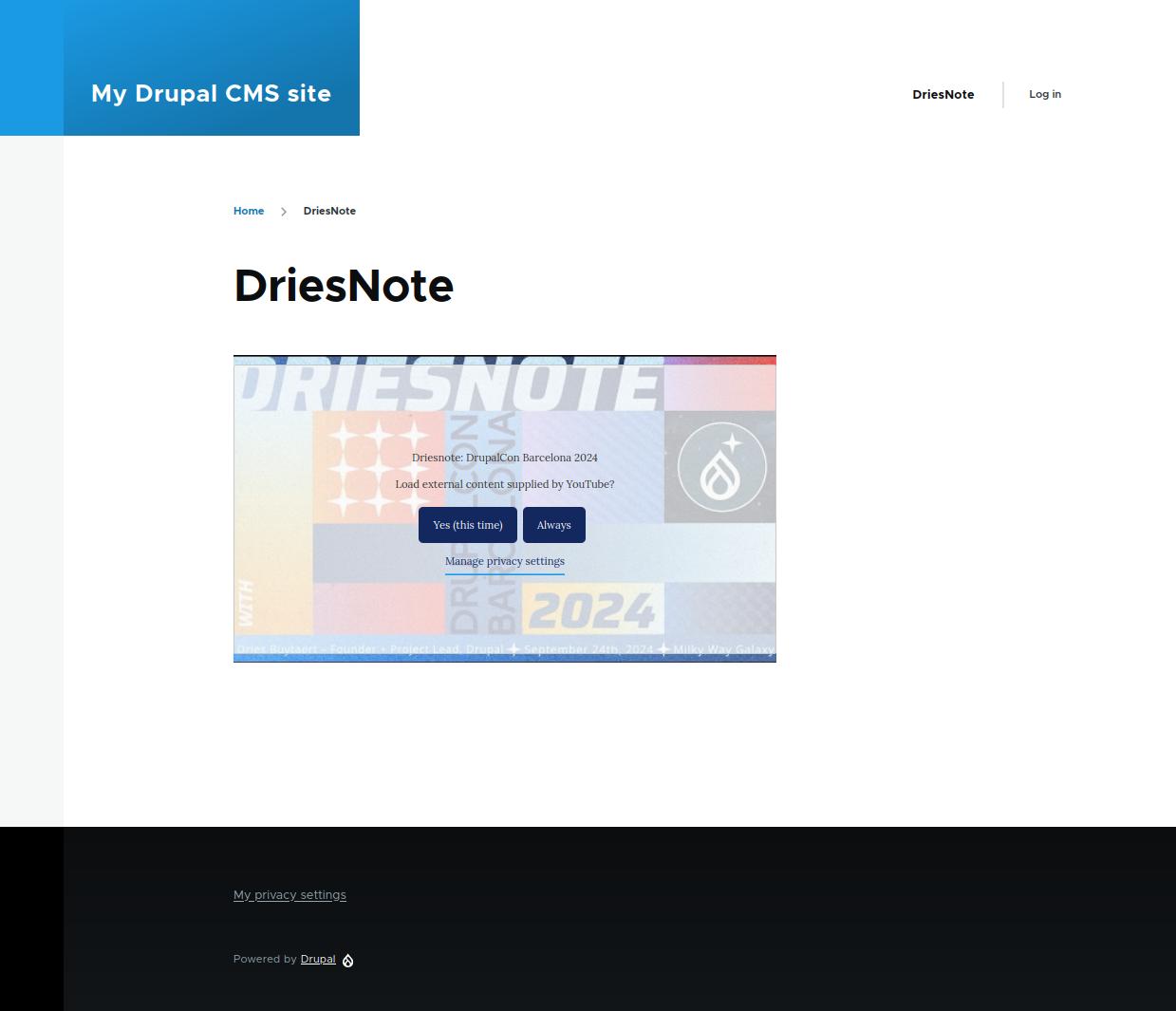
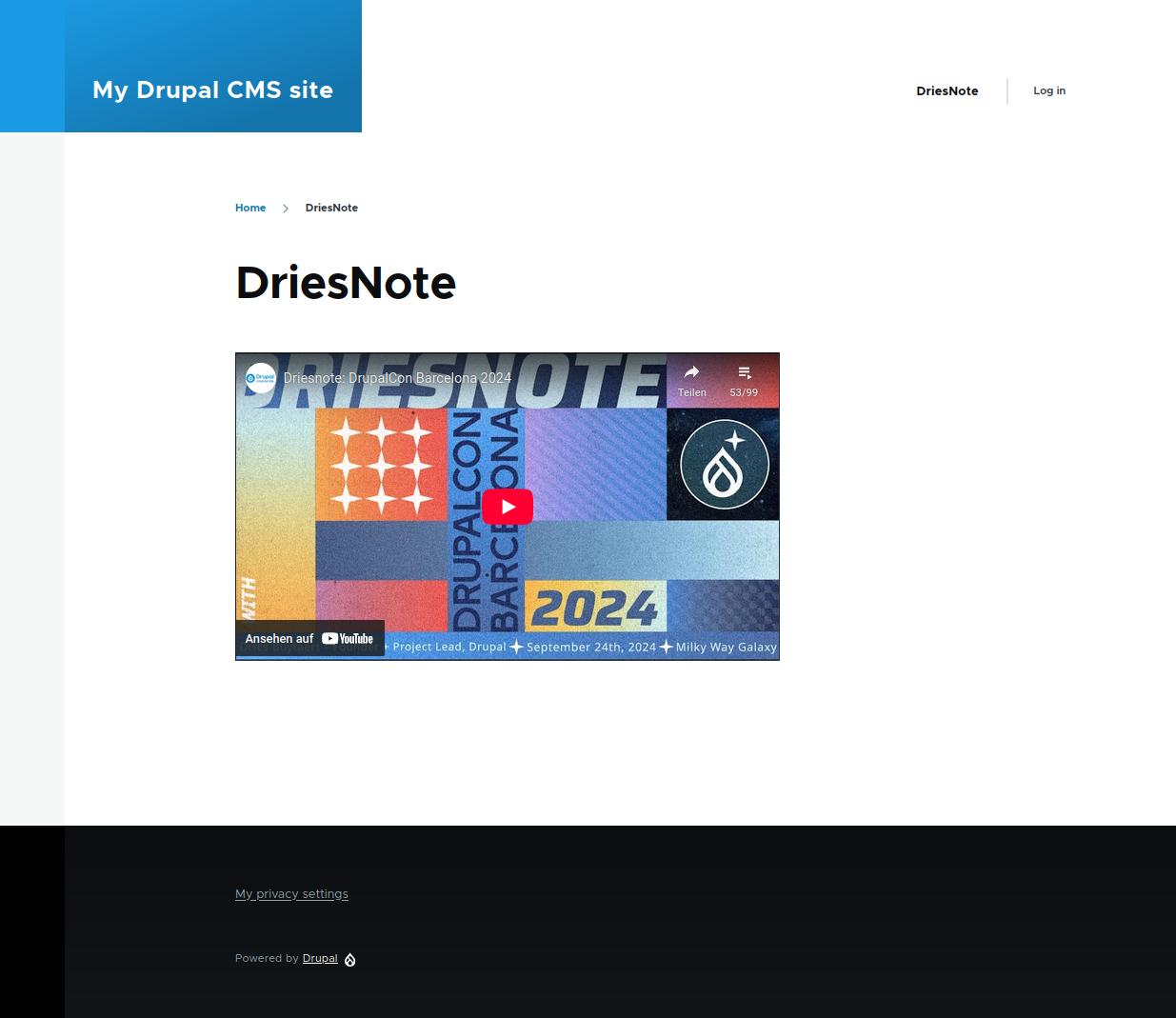
While the user has not given consent for remote videos, a placeholder will be loaded giving the user a choice before their data gets transferred to the provider
After consent has been given, either once or always, the video gets loaded and can be watched
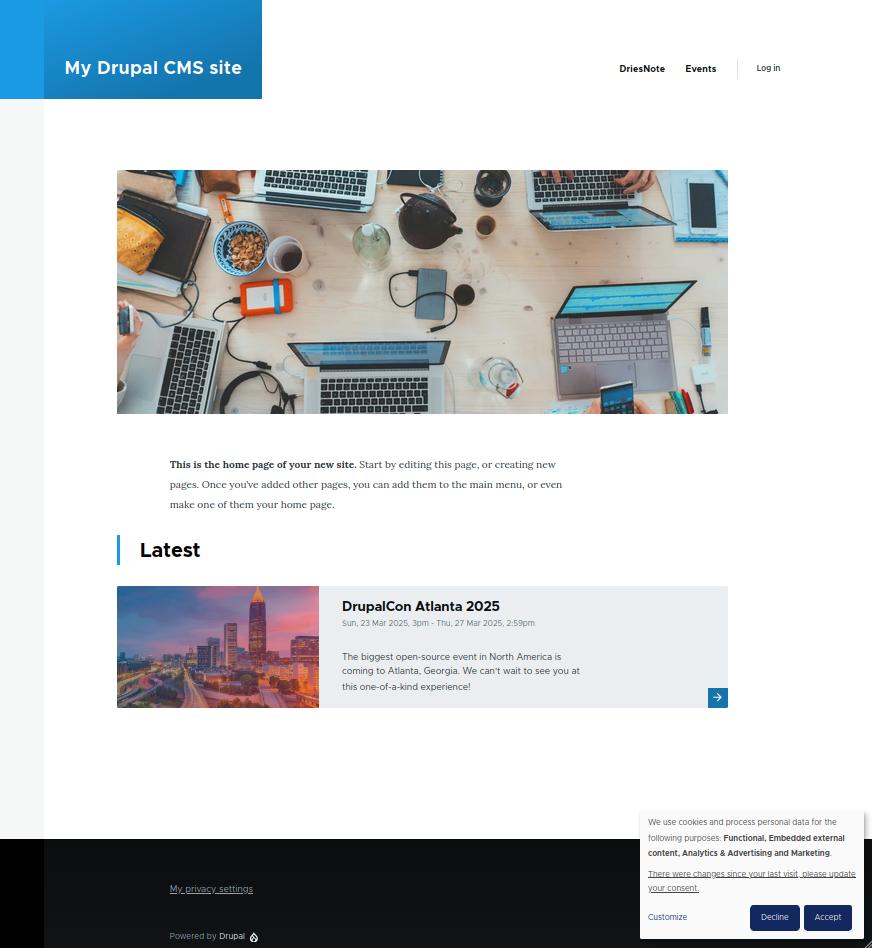
Now we have also applied the event and the analytics recipe
The latter requires user consent, which is why the widget on the bottom right of the page appears the get the user’s attention
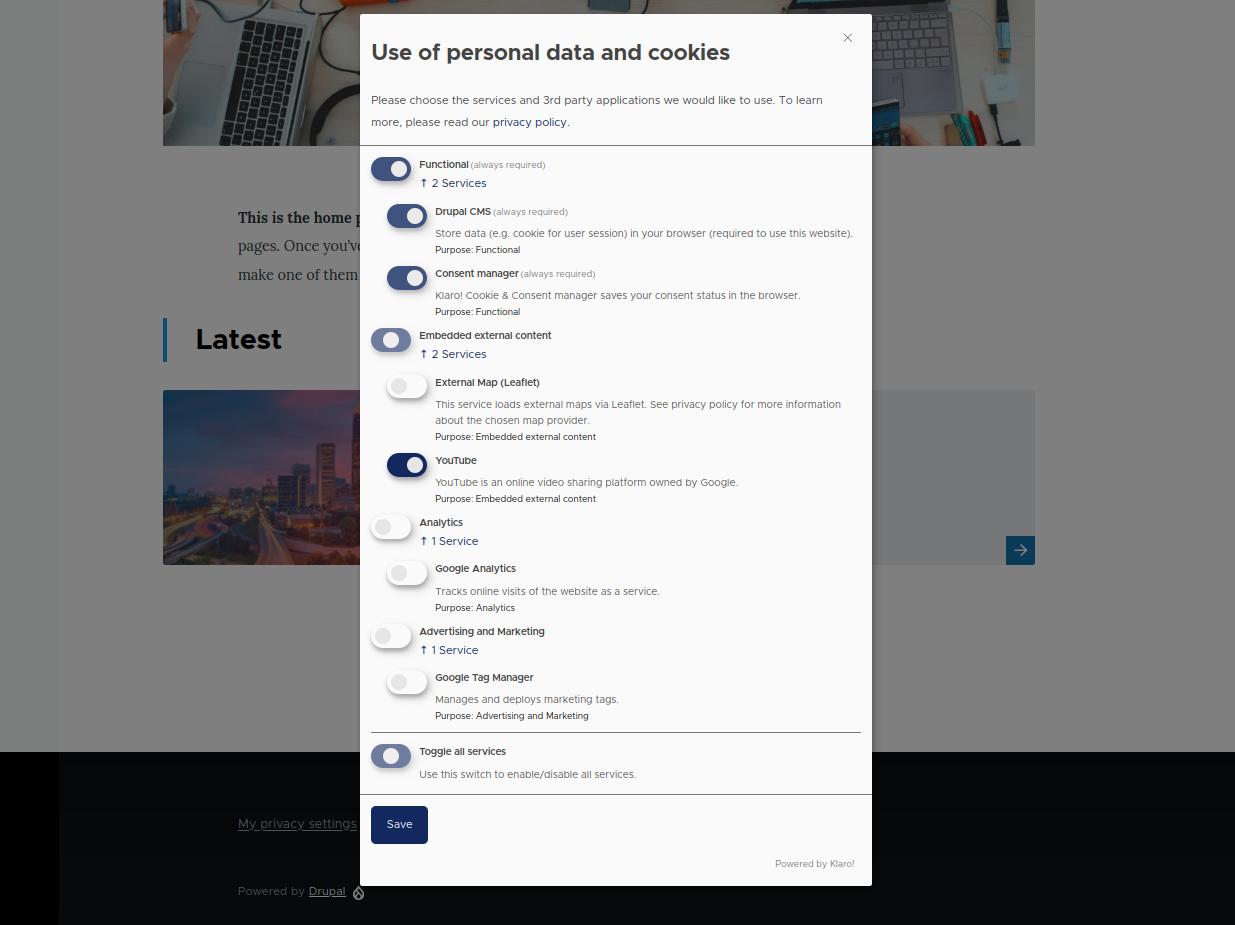
The widget is now more comprehensive
The topics can be expanded to see the individual services
Consent can be given per topic or service

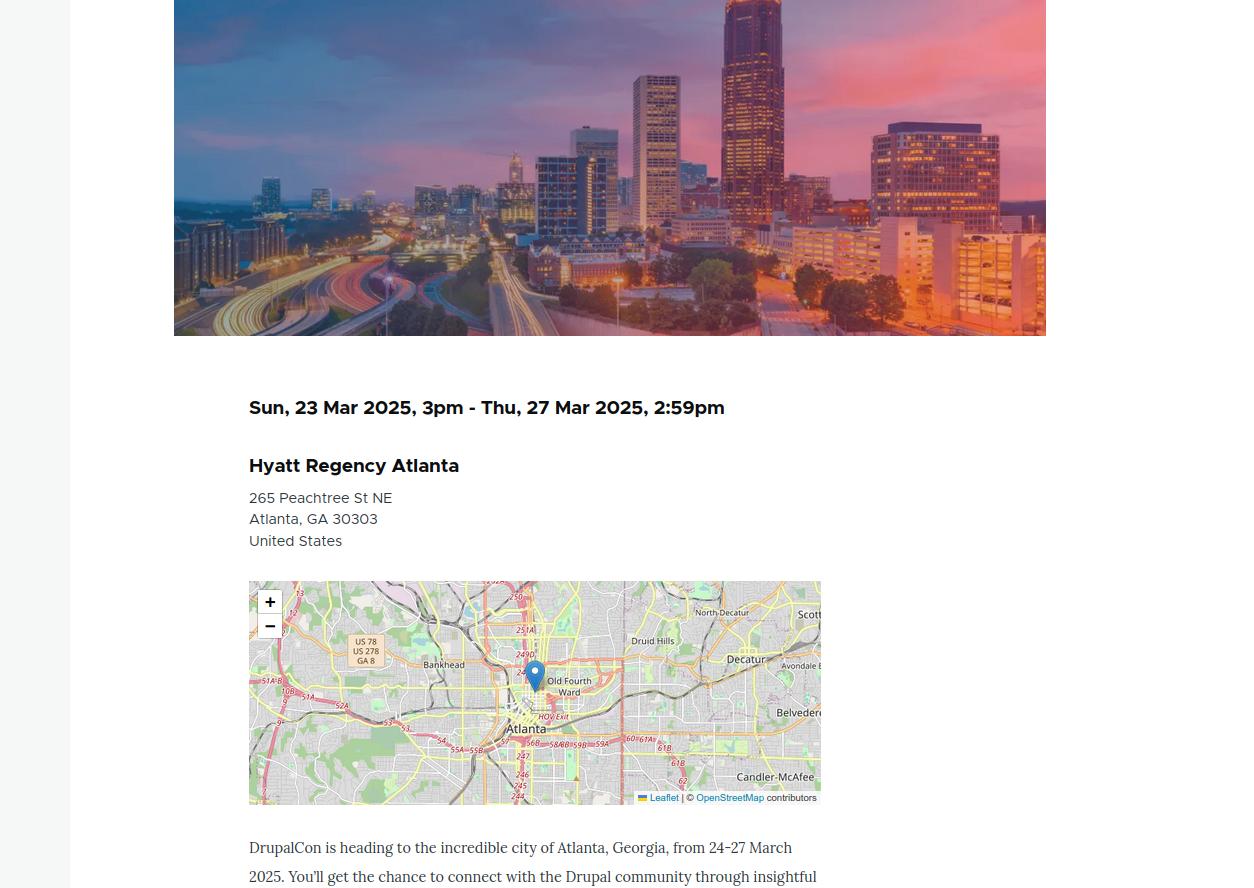
As with videos, maps from third party providers won’t be loaded before the user consents
The map loads immediately after user consent
Help users understanding what’s going on:
The widget is either not visible at all (=default) or disappears when user have made their decision once
It only comes back, if there are new services available since the user’s previous decision
As with remote videos and maps, the AI chatbot is supposed to send data to a remote service
When allowed, the AI chatbot is ready to do its work
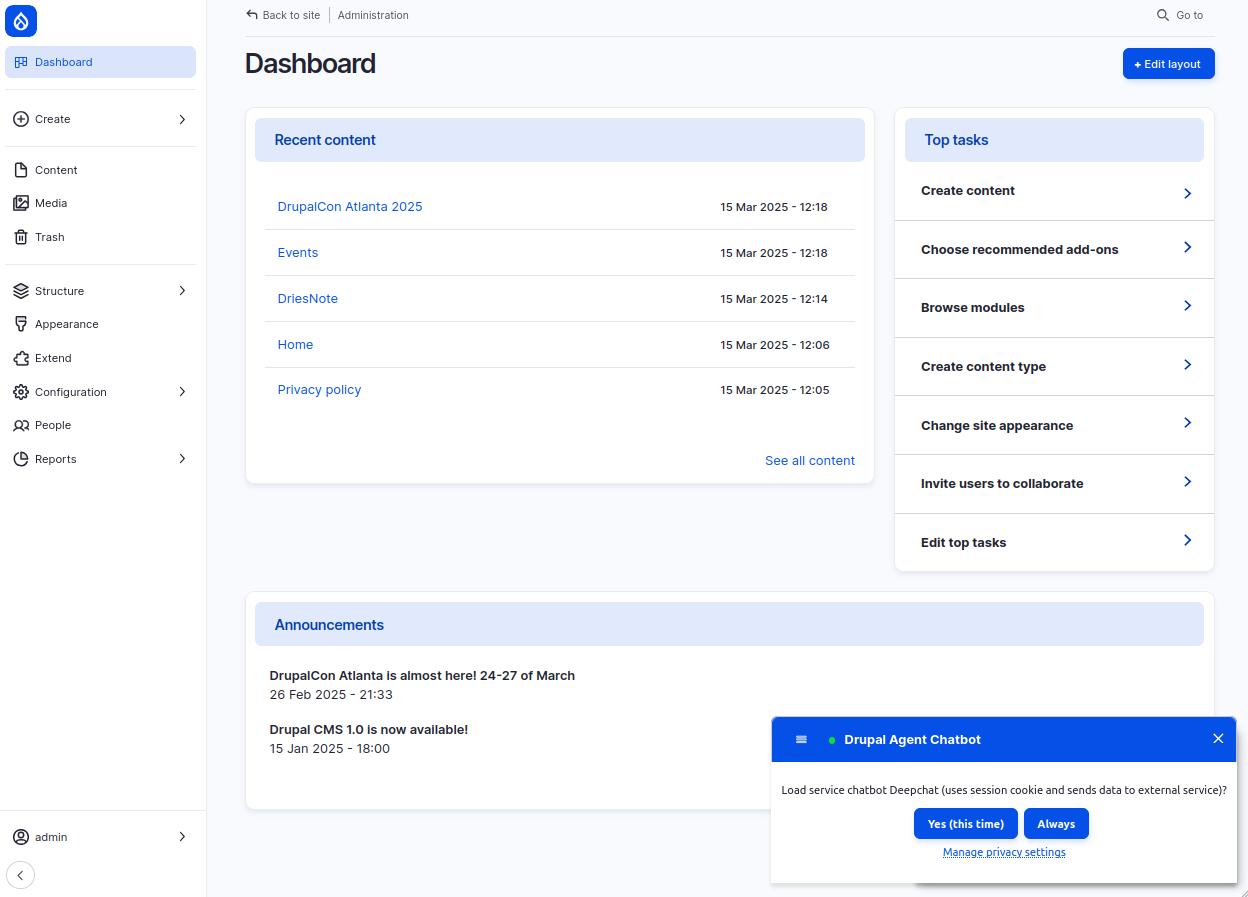
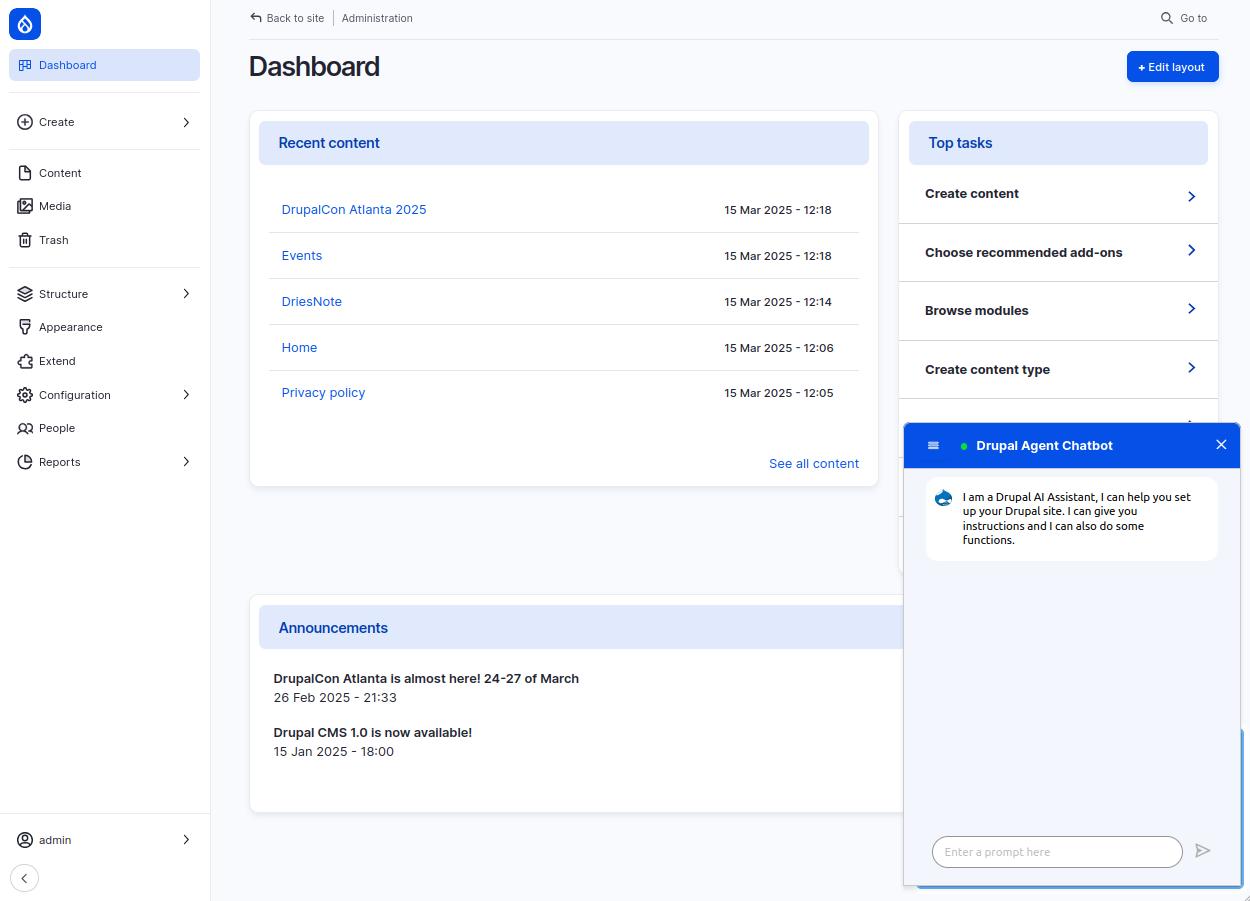
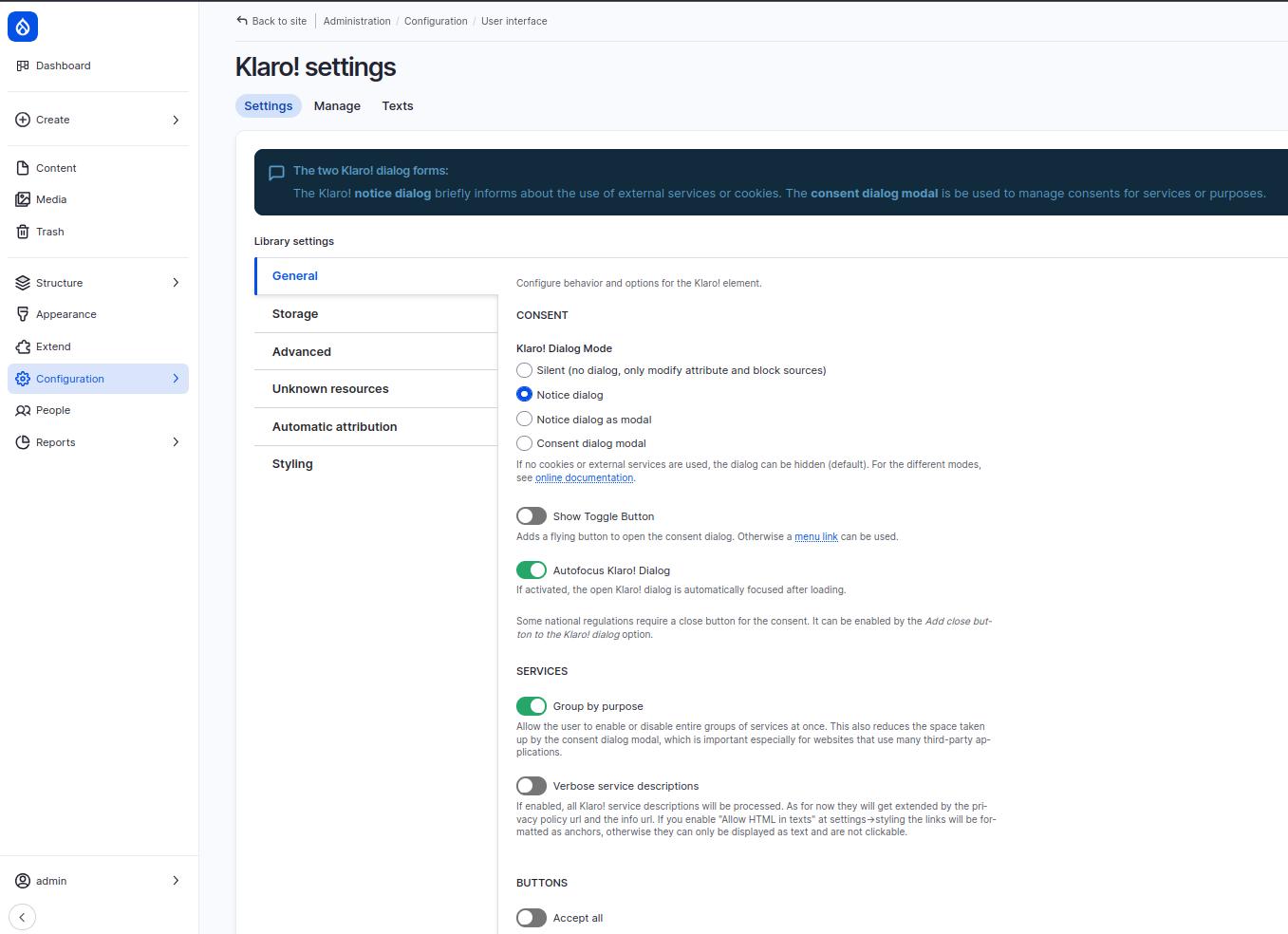
What we’ve seen so far, are the default settings of Drupal CMS
The site owner is able to tweak them towards their own needs
Drupal CMS is not preventing anyone from doing what they want
It just helps to get started and be ready for compliance
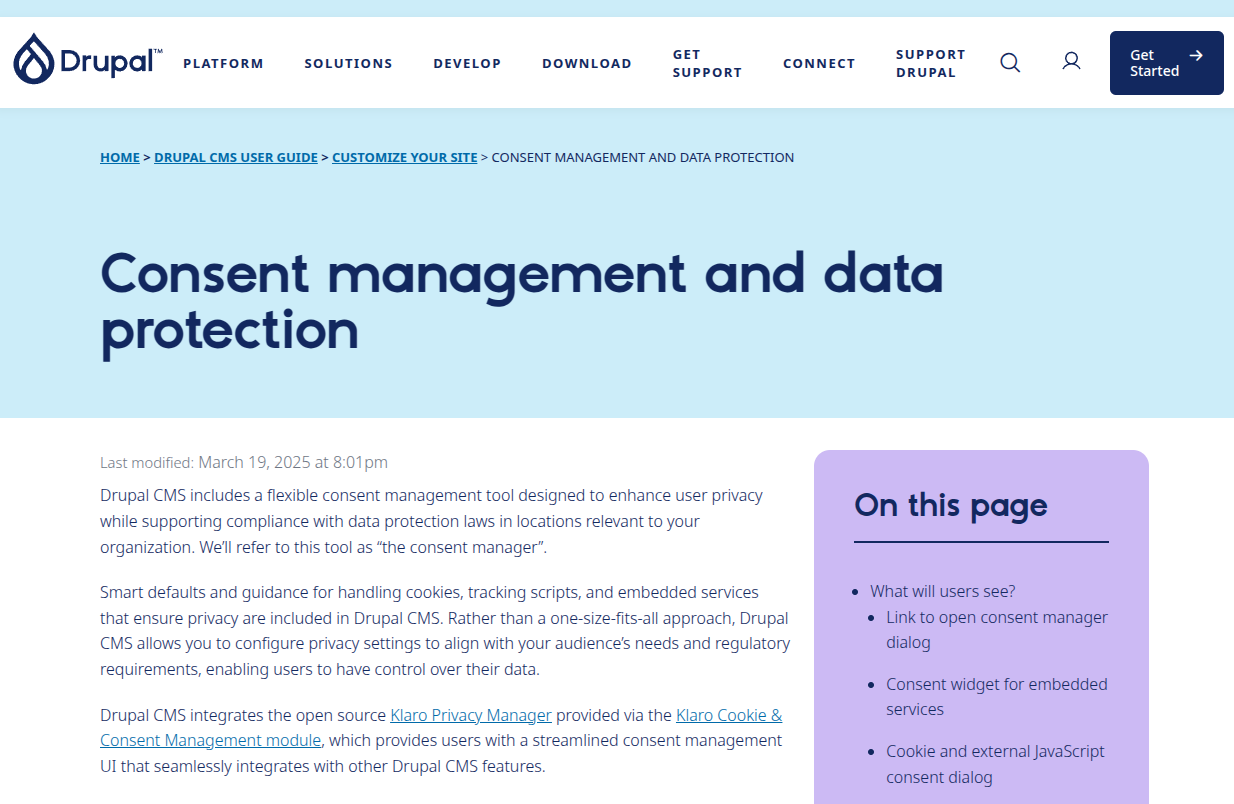
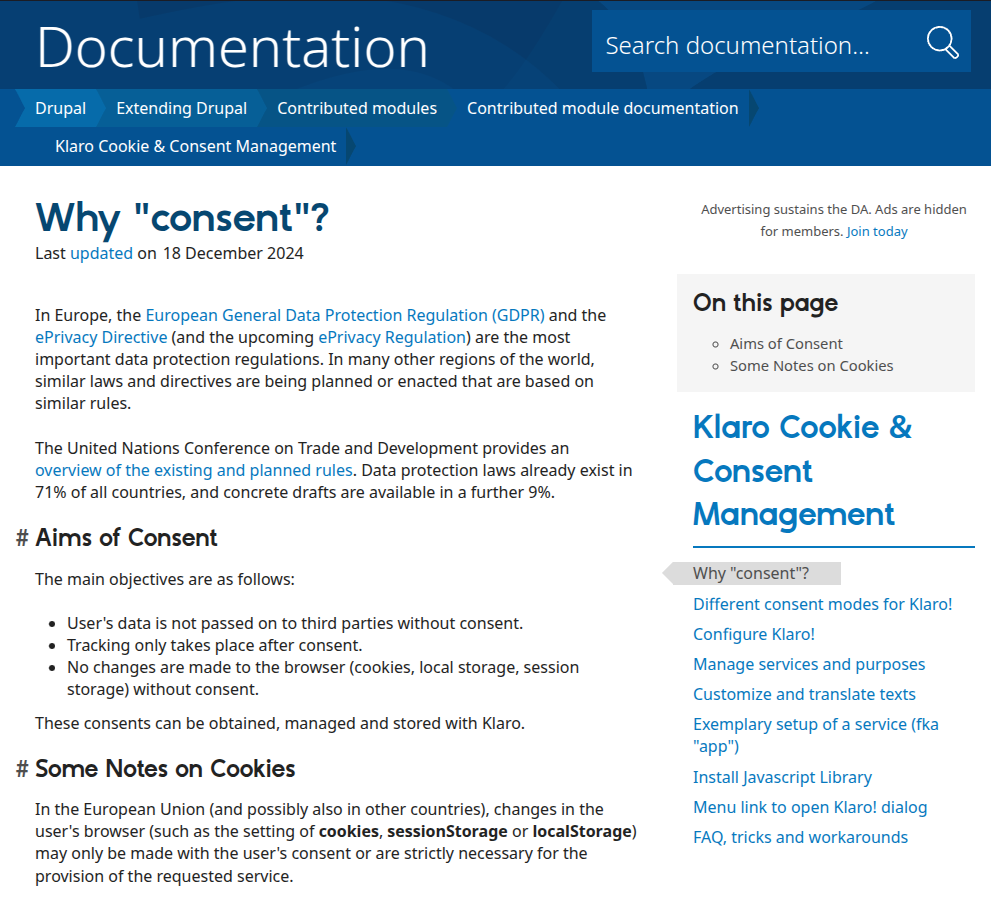
Documentation
Conclusion
- Fundamental right
- Not a status – a permanent process
- Consent management doesn’t ruin UX
- Data protection and audit will follow
Links
Slides go.lakedrops.com/privacy-leuven-2025
- Dries Buytaert Blog: The open web
- Drupal Association The Open Web Manifesto
- Heather Burns Understand Privacy
- Data Protection Laws of the World Data protection heatmap
- Documentation
- Drupal CMS Product
- Privacy Base Recipe
- Data Protection Advanced Recipe
- Consent Management
- Current activity
- Drupal Slack #drupal-cms-privacy
Find me online go.lakedrops.com/jurgenhaas
Q&A
My sponsors:
Thank you for your attention!
go.lakedrops.com/sponsor