In Post 8 I described my monthly billing run. One client never gets an invoice: the Drupal community, which has had almost all of my working time since July 2025. This post is that invoice. The eight posts before it showed the fun part: the Modeler API, the Workflow Modeler, test and replay, the ECA Guide, orchestration.
LakeDrops Blog

Photo by Kamil Foatov on Unsplash
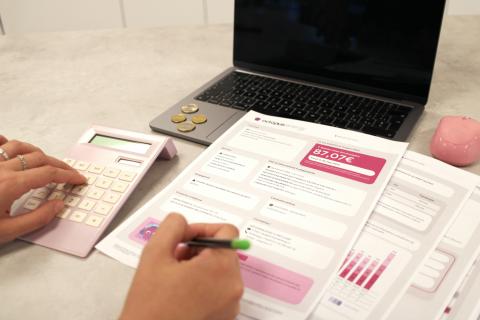
Photo by Giorgio Tomassetti on Unsplash
Every month I do my agency's billing by hand: export timesheets from one system, create invoices in another, merge, email, file, upload to the accountant. I maintain ECA. Elsewhere, a multi-agency project runs from an Excel sheet nobody can keep current, because the spreadsheet is the only place people see everything and feel in control. Everybody orchestrates, most by hand, and not for lack of tools.

Photo by Justin Morgan on Unsplash
This article introduces six new ECA Guide library recipes that improve the Drupal content editing experience through small, focused changes. They can draft metadata on first save, add access-aware edit links to teasers, prevent invalid dependent select values, offer field-level actions, fill several form fields without saving, and show contextual guidance beside a form. The point is not to apply all six recipes unchanged.

Photo by Frederic Köberl on Unsplash
This article explains why I use OpenCode as the stable local harness around replaceable remote AI models.

Photo by Rineshkumar Ghirao on Unsplash
The Drupal Association is changing CEOs, and the community reacted with the intensity it usually reserves for controversy. Jürgen, who sent the DA a formal four-page letter of concern in May, makes the case for constructive engagement over outrage. Leadership means disappointing half the room on almost every decision - disagree with choices without turning decision-makers into enemies. The practical call to action is the 2026 board election. Become a member now to earn the right to vote.

ECA documentation stopped being only for humans. The ECA Guide at ecaguide.org is now machine-readable infrastructure - an MCP server at /mcp with three tools (search_docs, get_page, list_sections), an llms.txt structured index, llms-full.txt with about 151,000 words, and clean Markdown for any page by adding index.md to its URL. All 1,206 plugins are documented and auto-generated at /plugins/.
Photo by mostafa meraji on Unsplash
ECA, FlowDrop, and Maestro all draw boxes and connect them with arrows, so people keep asking whether three Drupal workflow modules means a split community. Not quite. Dries Buytaert, Randy Kolenko, Shibin Das, and I are writing a shared orchestration design spec, disagreeing productively in writing. One axis explains all three: how much state a run carries. ECA reacts statelessly to any Drupal event across the whole request surface.

Building workflows blind - configure, deploy, hope, check logs - was the reality for years. ECA's integrated test, replay, and debug features close the feedback loop. Put the modeler in listening mode, trigger events, see execution results immediately with token values at each step. A small widget appears on any page where ECA processed events - click it, modeler opens in overlay with recorded execution data, replay what just happened right there in context.

Photo by Steve A Johnson on Unsplash
The new Workflow Modeler is a from-scratch implementation built in six weeks: React 18 + TypeScript, infinite canvas, execution replay, live testing, four export formats (Recipe/Archive/JSON/SVG), and a standalone embeddable viewer. Around 87,000 lines, more than 3,400 test cases, about 2.1x as much test code as production code.

ECA's in-context customization removes the learning curve barrier. A lightning bolt icon appears next to form fields with applicable templates. Click it, select a template, configure parameters - done. No need to understand events, conditions, or tokens. Templates are ECA models with special template tokens that define where they apply and what users can customize. Technical users can transition directly to the full modeler from context.