
Ten Months That Changed Everything: An ECA Journey
Two weeks ago, I stood on a stage in Athens, in front of the Drupal DevDays audience, and walked through 37 years in tech with a long stop at five years of ECA. That was the keynote. This series is something else: a much closer look at the last ten months, because that's when everything started moving faster than I could comfortably keep up with.
It started, as so many things in Drupal seem to, with a conversation with Dries Buytaert.
Back in June and July 2025, well before DrupalCon Vienna, Dries and I were talking about where ECA fits into Drupal CMS. He'd been watching the project for a while. He liked what he saw. And then he asked the kind of question that sounds simple but won't leave you alone afterwards:
We all know that ECA ships with Drupal CMS, but honestly, what does it do for the user?
Not "what features does it have?" Not "how is it built?" But: what does it do for the user?
I didn't have a good answer.
The 1% Feedback
What followed wasn't harsh, but it was honest. Dries' point, in substance, was that ECA today is maybe at 1% of what it could be. Not because the engine is weak - it isn't - but because the user experience around it is. Most site builders, he reminded me, will never open a visual modeler, no matter how good we make it. If we want ECA to matter, we have to bring its power to the places where users already are.
One percent.
That number sat with me for weeks. It wasn't a verdict, more like an invitation: what would it take to get from 1% to 10%? To 50%? To something that a non-developer would actually choose to use?
I came out of those conversations with two things. A very clear picture of the problem. And no idea how to solve it.
Working with Dries on the messaging in the months that followed turned out to be worth its weight in gold. By October 2025, ECA and orchestration made it into the DriesNote in Vienna. That moment wasn't the start of the work - the real work was still ahead of us - but it told the community this direction mattered.
The Timeline: June 2025 to April 2026
It helps to lay out what actually happened, month by month, before we dive into any one piece of it.
June/July 2025: The catalyzing moment
The private conversations with Dries Buytaert happen here. The "1% of what it could be" line lands. I start questioning a lot of things I thought I knew: who are we actually building ECA for, where is the real barrier, and what does "accessible" even mean for a workflow automation tool? In parallel, Dries and I refine how to talk about all this in public, with Vienna already in sight.
October 2025: Vienna - ECA in the DriesNote
DrupalCon Europe. ECA and orchestration appear in the DriesNote, which is the strongest signal you can get inside this community that a topic is on the map. I wasn't in Vienna at all - I had to follow the whole thing from home, which made the moment bittersweet. But the conversations the keynote sparked in Vienna's hallways and at the evening events turned out to be at least as valuable as the keynote itself. That's where the people who would shape the next ten months heard the message, and a few weeks later they started reaching out.
Watch: ECA and orchestration discussion starts at 57:43.
October-December 2025: The research phase
Shortly after Vienna, Emma Horrell and Mark Dodgson, both UX experts, reach out to me. Around the same time, Lauri Timmanee, the architect of Drupal Canvas, joins the conversation for deep user testing and pain point collection. None of them are easy on us, and that's exactly what we needed. Their message, more or less in unison: don't just improve, transform. Meanwhile, I'm prototyping the first answers to the "where users already are" question, and the UX research is starting to drive what we build next - not the other way around.
Around Christmas 2025: The in-context breakthrough
This is the moment I didn't see coming. While trying to solve "bring ECA to where users are", the obvious answer finally surfaces: stop asking users to come to a different UI at all. Bring automation to the places where they already customize their site. That idea becomes in-context customization - the little lightning bolt that now appears on forms (requires eca_form), and soon, in many more places. The Modeler API, which we'd already built back in February 2025, gets a serious round of refinement to support this new direction.
January/February 2026: The build sprint
Six weeks, head down. A new Workflow Modeler, built from scratch on React Flow and TypeScript. About 90,000 lines of code, 3,617 test cases (yes, more test code than production code), WCAG AA accessibility baked in from day one. Dark mode, structured YAML editing, drag-and-drop for tokens - all the polish you'd expect from a modern UI, finally inside a Drupal contrib tool.
March 2026: Chicago - The first reveal
DrupalCon North America. Dries mentions ECA in his keynote again, this time pointing at what's coming.
Watch: ECA discussion starts at 52:45.
A few hours later, I present "ECA Next Generation" to a packed room.
The reaction I'll never forget came in the hallway afterwards: "Wait, this is actually accessible now?" Followed quickly by: "When can we use this?"
February-April 2026: The refinement (still ongoing)
Real-world feedback starts arriving. Bug reports, edge cases, UX nits, ideas we hadn't thought of. We polish, retest, polish again. A documentation sprint produces comprehensive event coverage in the ECA Guide. AI integration lands too: an MCP server and an agent skill that lets AI assistants actually help you build models. None of this is finished, and that's fine - it shouldn't be.
April 2026: Athens - The keynote
Drupal DevDays Athens. Keynote invitation. I share the whole story: from "1% of what it could be" to "this is how Drupal can compete with SaaS tools on UX". The applause at the end went on noticeably longer than usual - nobody stood up, but the excitement in the room was almost touchable. And I don't think it was really for me. It was for what the community had built together over those ten months.
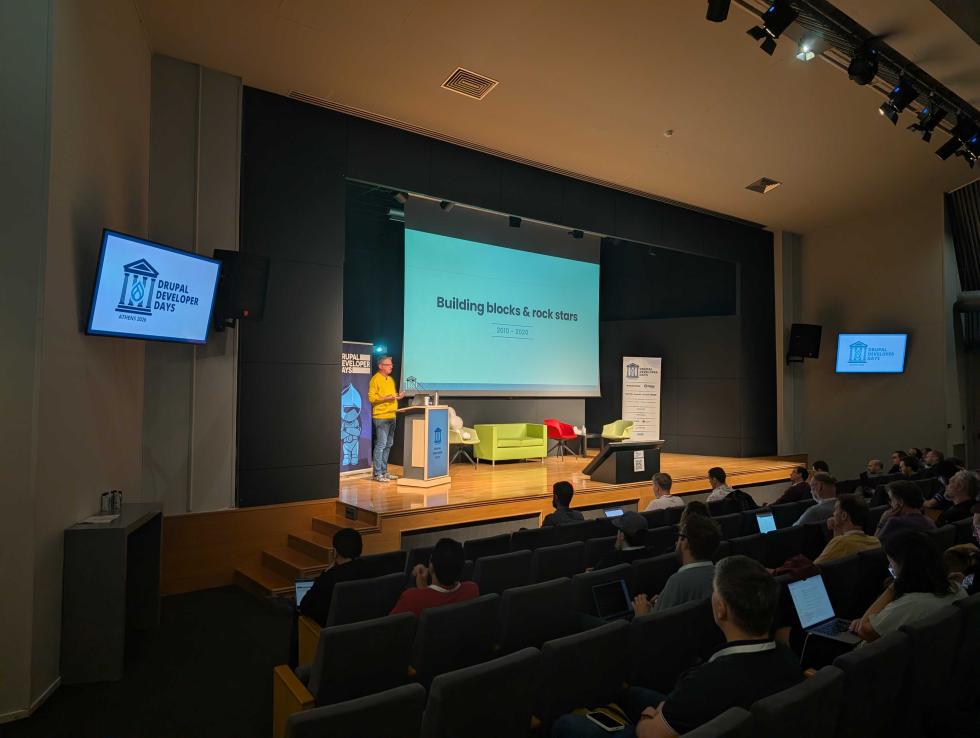
Caption: Sharing the ten-month ECA journey at Drupal DevDays Athens, April 2026
The Collaboration That Made It Possible
Full disclosure: I did not do this alone. Not even close.
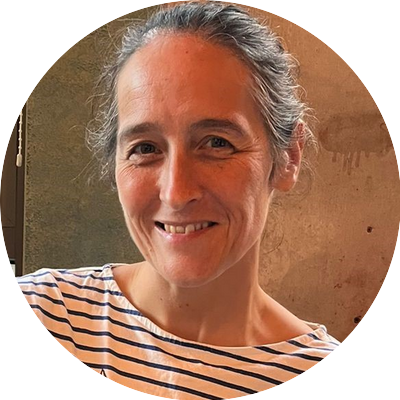
Emma Horrell spent serious time with site builders, watched them work, and turned my vague "I think users struggle here" into clear, evidenced statements about where the friction actually lives. The insight that became in-context customization came directly out of her research: no matter how good the modeler, most people won't open it - so bring the automation to where they already are.
Lauri Timmanee, the architect of Drupal Canvas, joined for the deep user testing and the "where does this still hurt?" conversations. Lauri also pushed us, repeatedly, to stretch the limits. His refrain - don't just improve, transform - is a big part of why the result feels different in kind, not just in degree.

Mark Dodgson, working closely with Emma, kept user-centered design thinking present in every feature decision. Together they made sure accessibility and usability weren't bolted on at the end. WCAG AA compliance, intuitive interactions, a modern feel - all of that came from UX research, not from us guessing.
Shibin Das, the maintainer of FlowDrop, met with me almost every week throughout this journey. We shared challenges, coordinated where it made sense, and celebrated the wins. There's a longer post about ECA and FlowDrop coming later in this series (Post 6), but the short version is: complementary projects grow the ecosystem when they collaborate, not when they compete.
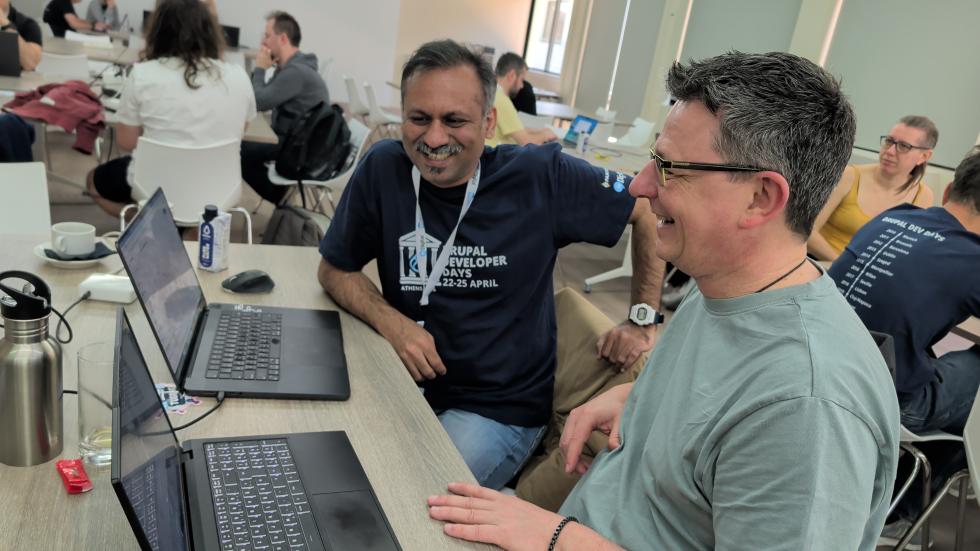
Caption: Shibin Das and Jürgen Haas at Drupal DevDays Athens - proof that complementary projects grow through collaboration
And then there's the community. The early adopters who tried things long before they were stable. The bug reporters who caught the edge cases. The contributors who sent patches. The people in the #eca-next-gen Drupal Slack channel who asked the hard questions and didn't let us off the hook. You know who you are, and I hope you also know that this would not have happened without you.
What We Built
So what did ten months actually produce? Here's the short version, with much more to come in the rest of the series.
The first piece, and in many ways the foundation, is the Modeler API. It was originally built back in February 2025 and has been improved continuously since then. The idea is straightforward: cleanly separate the things that own a model (ECA, migrations, AI workflows, whatever comes next) from the things that let humans edit those models (BPMN.iO, the new Workflow Modeler, future tools). Can you use visual modeling for migrations? Yes. For AI agent workflows? Yes. For Commerce checkout orchestration? Yes. Four model owners times three modelers equals twelve combinations, with no glue code in the middle. Post 2 will dive into this properly.
Sitting on top of that is in-context customization - the lightning bolt that now appears on forms, and soon on logins, redirects, rendering, and more. Click it. Pick a template. Adjust a few dropdowns. Done. You just automated something without ever becoming an ECA expert, and without leaving the screen you were already working on. Post 3 will show how this works in practice.
Next: the new Workflow Modeler. Built from scratch on React Flow and TypeScript. Modern UI, dark mode, infinite canvas, structured YAML editing, drag-and-drop tokens, and WCAG AA accessibility throughout. There's also a standalone viewer you can embed wherever you need to. Beyond the immediate benefit, this also quietly proves that Drupal contrib can ship a world-class JavaScript application when it wants to. Post 4 walks through it.
Then there's the feature long-time ECA users have asked for more than any other: test, replay, and debug. Live testing of your workflows directly from the modeler. Recording real events, like a Commerce purchase or a form submission. Replaying them step-by-step with the actual token values. As far as I know, no other workflow tool in any CMS does this today. Post 5 will demonstrate.
The ECA Guide and AI integration is a story of its own. Comprehensive documentation for every event. An MCP server for AI agents. An agent skill that lets AI help you build ECA models from natural language. Documentation becomes infrastructure: ask an AI for help with ECA, and now it actually knows what it's talking about. Post 7 explains how that came together.
Finally, the bigger picture: orchestration. ECA is one component of Drupal's orchestration layer, not the whole layer. FlowDrop, Maestro and others sit alongside it, each doing what they're best at, coordinating work across Drupal, external services like n8n and ActivePieces, AI agents, and MCP-enabled tools. Drupal becomes the hub. Post 8 explores what that means in practice.
Why This Matters to End Users
If you're a site builder or content editor, here's the short version: ECA is about to feel like a different tool. The lightning bolt on forms is only the beginning - imagine that contextual power available everywhere in Drupal, without ever asking you to touch code or open the visual modeler.
Your feedback shaped this, by the way. The path from Vienna to Chicago to Athens only worked because Dries listens, we listened, and so did Emma, Mark, Lauri, and many others. The 1% conversation happened in private, but everything since then has been shaped by what users said in public.
And none of this is finished. The next chapter, the one that turns ten months of work into something you actually depend on, starts when you try the new features and tell us what's still missing.
Why This Matters to Drupal
For the ecosystem, the strategic picture is more interesting than any single feature. With the Modeler API and in-context customization, Drupal isn't just offering automation. It's offering accessible, visual, integrated automation that lives where users already work. That's an honest answer to "we need Zapier" or "we need n8n", and it's an answer no SaaS tool can give, because the automation lives inside Drupal, not next to it.
The other thing worth saying out loud is that UX-first development is genuinely possible in contrib. This series is, among other things, the evidence. When community feedback, UX research, accessibility expertise and focused development time line up, you don't get incremental improvement. You get a different category of result.
That's also a good moment to acknowledge that Drupal CMS gave ECA the visibility that made all of this possible. Sustained innovation, though, needs sustained investment. More on that in Post 9.
Why This Matters to Developers and Contributors
If you build Drupal sites or contribute to the ecosystem, there are a few takeaways worth sitting with.
The first is about feedback. Dries' "1% of what it could be" wasn't criticism, even though it could easily have read that way. It was an invitation to be revolutionary instead of incremental. Honest, strategic feedback to maintainers, given at the right moment, doesn't discourage them. It catalyzes breakthroughs.
The second is about collaboration. Emma's UX expertise plus Mark's UX insight plus Lauri's "stretch the limits" push plus Shibin's weekly coordination plus community feedback didn't just add up. It compounded. Find your collaborators, share what you know, and build together. The math is genuinely different when you do.
The third is about pace. Ten months from "needs work" to "keynote-worthy" is not magic. It's focused effort on the right problems, supported by the right people, at the right time. The architecture is documented. The patterns are visible. This is replicable.
What's Next: The Series Roadmap
This is Post 1 of 9 in the "ECA: The Next Chapter" series. Here's what's still ahead:
- Post 2: The Architecture That Changed the Game (Modeler API deep dive)
- Post 3: For Everyone: In-Context Customization Without the Learning Curve
- Post 4: The New Workflow Modeler: Revolutionary, Not Just Improved
- Post 5: Test, Replay, Debug: Closing the Feedback Loop
- Post 6: Three Players, One Direction: ECA, FlowDrop, and Maestro
- Post 7: The ECA Guide Revolution: Documentation Meets AI
- Post 8: Everybody Orchestrates. Most Do It by Hand.
- Post 9: Eight Posts on the Fun Part. One on the Bill.
Each post goes deep on one specific aspect. By the end of the series, you should have a good sense not just of what we built, but of how and why - and what it means for Drupal's future.
A Word on Sustainability
Having said that, here's a piece of honesty I want to put on the record now, rather than save for Post 9: the pace of these ten months was made possible by a particular combination of aligned schedules, occasional client projects that funded development time, UX research partnerships, community collaboration, and - let's be real - the occasional miracle of finding focused time inside a volunteer-driven ecosystem.
That is not sustainable long-term. Innovation at this pace and quality needs support. We'll talk about funding openly in Post 9, but it would feel wrong to celebrate the ten-month sprint without naming the conditions that made it possible.
Everything we built is freely available, open source, and benefits the entire Drupal ecosystem. If you use it, love it, or depend on it, there will be concrete ways to help keep this kind of work going. More on that later in the series.
Join the Journey
This post is the beginning. Over the next several weeks, the rest of the series will land, one post every five to seven days, each going deeper into a specific breakthrough or lesson.
The features we've built solve problems we already knew about. The ones we haven't built yet depend on feedback from people like you - site builders who know where automation should appear, developers who see the integration opportunities, architects who can sketch the next orchestration patterns.
There are three easy ways to be part of what comes next. Try the new features: install ECA 3.1+ and the new Workflow Modeler, click the lightning bolt on a form, build a model, and test it live. Talk to us: in Drupal Slack #eca-next-gen, in the comments below, or via our contact form. And if this story resonates, share it - the more people who understand what's possible, the easier it is to keep the momentum going.
Looking Back, Looking Forward
From those first private conversations with Dries in June and July 2025, through Vienna's DriesNote validation, to the first reveal in Chicago, to the keynote in Athens. From "1% of what it could be" to "keynote-worthy". From isolated features to something that starts to feel like ecosystem infrastructure.
Ten months that changed everything.
But honestly, the next ten months matter more. What we built is a foundation. What the community builds on top of that foundation is where the real transformation happens. Will you build accessible automation into your next client project? Will you create template libraries for the recipes your sites need? Will you extend the Modeler API with your own model owners? Will you wire Drupal's orchestration layer into the external services you already use?
The tools are ready. The architecture is solid. The community is growing.
The next chapter starts now, and you're part of it.
Want to help us move faster? Join us in Drupal Slack #eca-next-gen, comment below, or send us messages using the contact form. We'd love to hear back.
About This Series
"ECA: The Next Chapter" is a 9-post series documenting the journey from Dries Buytaert' private feedback conversations in June/July 2025 through the Athens DevDays keynote in April 2026. It covers the architectural breakthroughs that made everything possible, the UX research that shaped accessibility, the features that make automation genuinely approachable, the collaboration patterns that accelerated development, and the sustainability challenges we face together.
Disclosure: I've used AI to collect the required data, to build the structure, and to create content suggestions based on my own input. I've also used Deepl and LanguageTools for spelling and grammar improvements. Writing the article itself I consider my own work, and AI has simply been a supporting tool.
Published weekly starting 12th May 2026. Follow along, try the features, join the conversation.
Add new comment